
Full career mode walkthrough for Bruisers 2D Boxing: amateur bouts, the pro ladder, rankings, purses and the champion route.
Bruisers 2D Boxing Career Mode Guide: Amateur to Champion
Full career mode walkthrough for Bruisers 2D Boxing: amateur bouts, the pro ladder, rankings, purses and the champion route. Source: Bruisers 2D Boxing on Steam
Career mode is the whole point of Bruisers. Quick Play gives you a roster and a bell; career gives you a body that ages, a bank balance that empties, a trainer who wants you to eat properly, and a rankings list where sixty other fighters are also trying to move up.
This walkthrough follows the route from a first amateur bout to a belt defence, and marks the places where players usually ruin a promising run.
The three circuits
Bruisers runs three parallel ladders:
- Amateur — short bouts, low purses, judges who score purely on clean punches landed. This is where you learn distance without being punished for it.
- Professional — the Contenders list, ranked 1 to 60, with belts, mandatory defences and fighters who retire out from under you. Judges here score work rate, ring generalship and effective aggression, not just connects.
- Bareknuckle — backyard and warehouse cards with no commission, bigger cash, and damage that follows you back into the legitimate rankings.
You can move between them, and the game actively pushes you toward the third one when your purse does not cover rent. Treat bareknuckle as a loan against your health, not free money.
Create-a-fighter: what actually matters
The creation flow offers presets and a confirmation screen. Height, reach and natural weight all feed the weight system later, so decide early whether you want a fighter who can boil down or one who campaigns heavy.
You pick a style — Slick, Bully or Balanced — and the choice changes your entire defensive toolkit, not just your stats. See Slick vs Bully vs Balanced before you commit; re-rolling is cheaper than rebuilding a career at year four.
The career hub, in order
Between fights the hub gives you a limited number of actions, each costing energy:
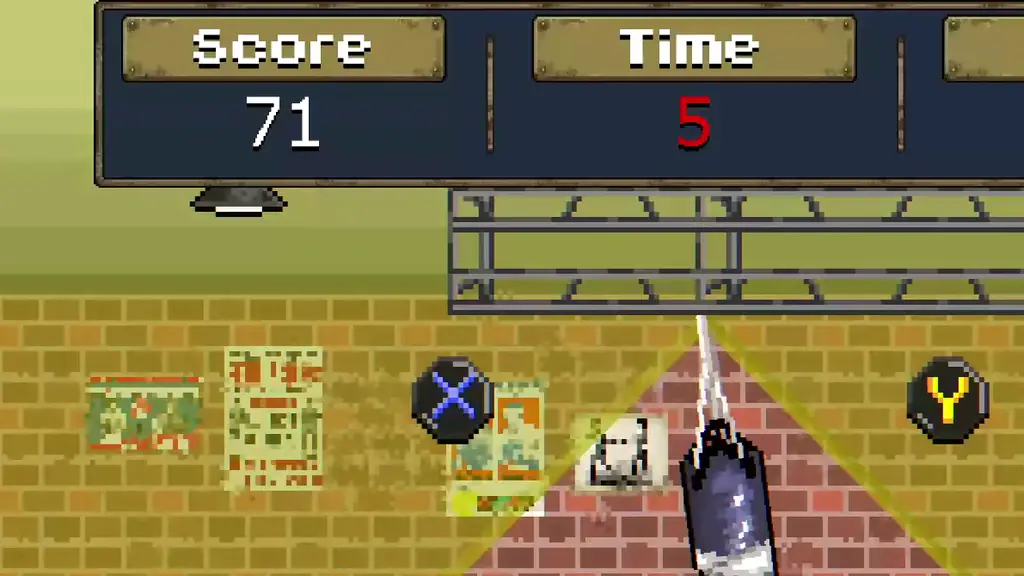
- Train — mini-games or auto-training. Mini-games pay more, auto-training is the fallback when you are short on time.
- Work — a job shift for cash that eats energy you might have spent on camp.
- Eat and shop — the BruiseFuel store sells meals and meal plans. Nutrition drives weight and recovery.
- Heal — the health screen fixes accumulated damage. Healing costs scale with your level, so a cheap early repair becomes a real expense at title level.
- Read email — scouting reports, promoter offers, mob contact, drug-test notices and betting storylines all arrive here.
- Book the next fight — purse, rounds, venue and opponent quality are all visible before you sign.
The onboarding trainer walks you through this the first time. Do not skip it; the energy budget is the one system the tutorial explains better than any guide can.
Reading the Contenders list
The rankings are 60 deep and they move without you. Fighters age, lose, retire and get replaced by newcomers who now arrive as a mix of journeymen, solid hands and the occasional genuine prospect — a change from launch week, when every new entrant spawned with elite stats.
Before accepting a bout, check:
- Rank delta — beating someone above you moves you faster than padding wins below.
- Style matchup — a Bully with no side-step is food for a Slick counter-puncher.
- Rounds — longer scheduled fights favour the fighter with better conditioning and less accumulated hand damage.
- Purse vs healing cost — a $900 fight that costs $700 to recover from is not a payday.
Title shots appear when the champion's mandatory cycle opens or when you are ranked high enough to be the obvious draw. Win the belt and defences start counting against your body: each one is scheduled, not optional, and ducking costs reputation.
Weight, injuries and the compounding problem
Two systems end more careers than any opponent.
Weight — you can come in heavy or light on purpose, and both are legitimate strategies with trade-offs. Missing weight badly is not. See how to make weight for the meal-plan approach that keeps a cut predictable.
Injuries — damage carries between fights and is tracked per body part: head, body, left and right arm, left and right hand. A sore hand becomes a damaged hand if you keep throwing it. Fight with a critical arm and you will lose by stoppage to someone you should have beaten.
The health screen is not cosmetic. Repair before you sign, even when it means turning down a fight you want.
Story branches worth knowing
Career mode is not a straight ladder. Email threads open and close:
- Mob contact sends a dark web code. Use it and the black market opens; ignore or delete the mail and it comes back until you use it, then never again. Get cut off and the mob stops writing entirely.
- Betting storylines let you put money on yourself, or on the other man.
- Rivalries build from close fights, callouts and stolen title shots. A rival will follow you up the rankings and take fights you wanted.
- Drug tests follow doping. A positive test is a suspension, not a fine.
None of these are side quests. They change purses, rankings and whether your career ends in a Hall of Fame induction or a backyard.
Ending a run well
Retirement is a decision, not only an event. The game will let you keep fighting past your best years; the news feed will start describing you as shopworn, and the offers will get shorter and dirtier.
The strongest endings usually come from:
- defending a belt two or three times rather than chasing one more division,
- clearing injuries before a farewell fight,
- settling or refusing the last mob favour,
- and leaving with a win rather than a stoppage loss on the record.
If you want the mechanical side of the early game first, read how to play career mode, then the tips page for the first ten fights.
FAQ
How long does a full career take?
Roughly fifteen hours for one playthrough, and thirty or more if you chase multiple endings and divisions.
Can you change weight class mid-career?
Yes — moving up or down is a career decision with trade-offs in reach, power and which opponents are dangerous.
What happens when you lose a fight?
You drop in the rankings, your purse shrinks and rivals react in the news feed. A loss is not a run-ender unless you are on a title streak.
Sources
More Bruisers 2D Boxing Guides
Ten things that matter in your first fights in Bruisers 2D Boxing: stamina, distance, the corner, weight and money.
A comparison of the three Bruisers 2D Boxing styles: Slick, Bully and Balanced, their abilities, weaknesses, and which one suits a first career.
How the clinch works in Bruisers 2D Boxing: tie-ups, clinch punching, referee breaks, headbutt disqualifications and the in-fighting stance.
Whether Bruisers 2D Boxing is coming to PS5, Xbox or Nintendo Switch, what the store page says, and how likely a console port really is.
How the controls work in Bruisers 2D Boxing: moving, punching high and low, slipping, parrying, clinching and the corner mini-game inputs.
A guide to the between-round corner in Bruisers 2D Boxing: swelling drain, cut repair, tool switching, pressure and how to stop a fight being stopped on you.
How the Darknet works in Bruisers 2D Boxing: buying dope, gear and services off the books, what it costs, and how the risk lands on your fighter.
How defence works in Bruisers 2D Boxing: slipping, parrying, head movement, catching and shooting, and the reads that turn defence into offence.