
How defence works in Bruisers 2D Boxing: slipping, parrying, head movement, catching and shooting, and the reads that turn defence into offence.
Slipping, Parrying and Head Movement
How defence works in Bruisers 2D Boxing: slipping, parrying, head movement, catching and shooting, and the reads that turn defence into offence. Source: Bruisers 2D Boxing on Steam
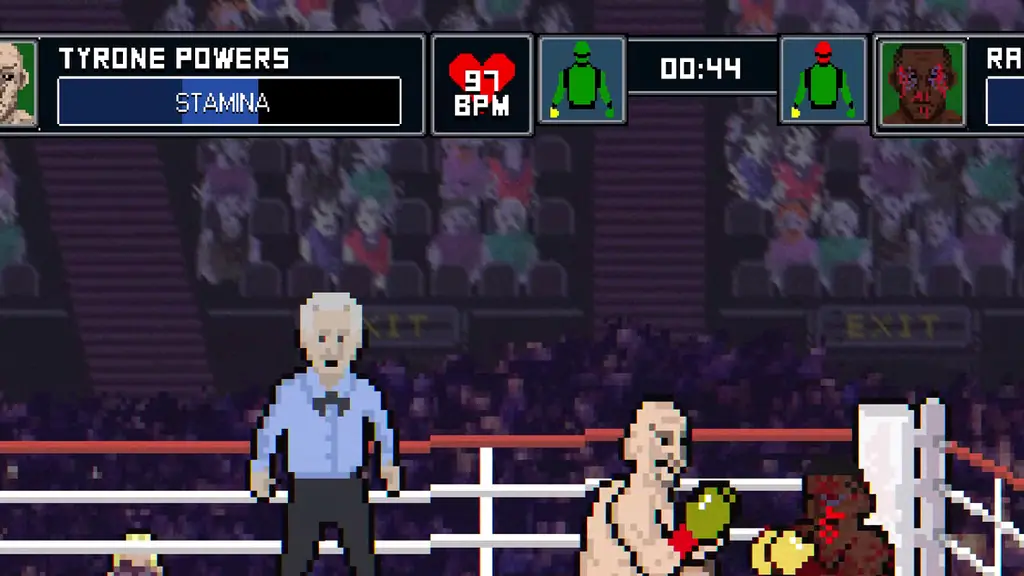
The store page makes a claim that turns out to be true: the boxing is real. Slipping, countering, head movement and distance control are not decorative. They are how fights are won against opponents who hit harder than you.
The defensive options
- Slip — move your head off the centre line to let a straight or a hook pass. The most rewarding defensive input, because it leaves you in position to counter.
- Parry — deflect a punch with a small hand movement. Tighter timing than a slip, but it keeps your feet planted and your counter shorter.
- Head movement — continuous small movement that reduces the CPU's accuracy over a round. It is not a button you press once; it is a habit.
- Guard — the default. Costs stamina when absorbing, and does not stop body shots.
- Step out — the simplest defence. Distance beats every punch.
The game's own framing — "slip, counter, move your head, control distance, break your opponent down" — is the correct priority order.
Slip, then counter
A slip that does not produce a counter is just a dodge, and dodging loses on the cards. The sequence that wins rounds:
- Read the punch (the CPU telegraphs; so do human opponents).
- Slip to the correct side — outside the hook, inside the straight.
- Land the counter while the opponent is still committed.
- Exit before the second punch arrives.
Slick and Balanced fighters have the side-step as an extension of this: a lateral escape that creates the counter angle rather than just avoiding the shot. Bully fighters do not have it, which is why they defend by smothering instead.
Parry timing
Parrying is a tighter window than slipping and it pays differently: a parry leaves you square to the opponent with a short counter available, while a slip leaves you off-axis with a longer one.
Use parries when:
- you are cornered and cannot slip out,
- the opponent is throwing a predictable jab,
- or you want to counter with an uppercut, which needs you close.
Do not parry everything. A failed parry is worse than a guard, because your hands are out of position.
Head movement as a stat
Continuous head movement reduces incoming accuracy across a round. It costs a little stamina and it is the cheapest defensive investment in the game. Against a CPU that has adapted to your rhythm, movement is what breaks the read.
The cost is that movement with no plan puts you out of position for your own offence. Move, then punch; do not move and hope.
Distance is defence
The best defensive fighters in Bruisers spend most of the fight at a range where the opponent's best punch cannot reach them. That means:
- Standing just outside jab range, not inside it.
- Stepping in to punch, then stepping out.
- Never trading at mid-range with a heavier fighter.
If you are getting hit a lot, the fix is usually your feet, not your hands.
Defence against each style
- vs Bully — do not let them clinch; circle, jab, and punish the haymaker with a counter. Their entry is slow.
- vs Slick — cut the ring off. Do not chase; walk them to the ropes and make them defend.
- vs Balanced — be the one who commits first, but only behind a jab.
Reading CompuBruise
Your post-fight card lists punch percentages for both fighters, head and body shots, and per-round scoring. If the opponent landed 60% of their hooks, your head movement was not working. If they landed nothing but jabs, you were probably too passive at range.
That card is the only reliable feedback the game gives you about defence. Read it after every fight, not just the losses.
A drill for new players
Spend one amateur fight throwing nothing but jabs and counters. No hooks, no overhands, no clinching. You will lose some rounds on output and you will learn more about timing than in ten fights of swinging.
Then read punch selection and add one power punch back at a time. Defence first is not a slogan in this game; it is the shortest route to a winning record.
FAQ
Slip or parry?
Slip for a longer counter window, parry to stay planted and answer immediately. Parry timing is tighter.
Why do I still get hit while slipping?
Slipping moves you off one line; a hook to the new position still lands. Read the punch, not the rhythm.
Does head movement drain stamina?
Yes, and more than beginners expect. Constant slipping with no punches is a slow loss.
Sources
More Bruisers 2D Boxing Guides
How the clinch works in Bruisers 2D Boxing: tie-ups, clinch punching, referee breaks, headbutt disqualifications and the in-fighting stance.
Whether Bruisers 2D Boxing is coming to PS5, Xbox or Nintendo Switch, what the store page says, and how likely a console port really is.
How the controls work in Bruisers 2D Boxing: moving, punching high and low, slipping, parrying, clinching and the corner mini-game inputs.
A guide to the between-round corner in Bruisers 2D Boxing: swelling drain, cut repair, tool switching, pressure and how to stop a fight being stopped on you.
How the Darknet works in Bruisers 2D Boxing: buying dope, gear and services off the books, what it costs, and how the risk lands on your fighter.
What doping does to your fighter in Bruisers 2D Boxing, how the vitals panel reads, heart damage, and why a chemically enhanced career is a risk decision.
How the Bruisers 2D Boxing roster works: named opponents, records, divisions, and how to scout a fighter before you sign the contract.
How to play career mode in Bruisers 2D Boxing: building a fighter, booking fights, training camps and making weight.